‘Einstein’s flying mirror’ technique opens a path towards extreme light intensities
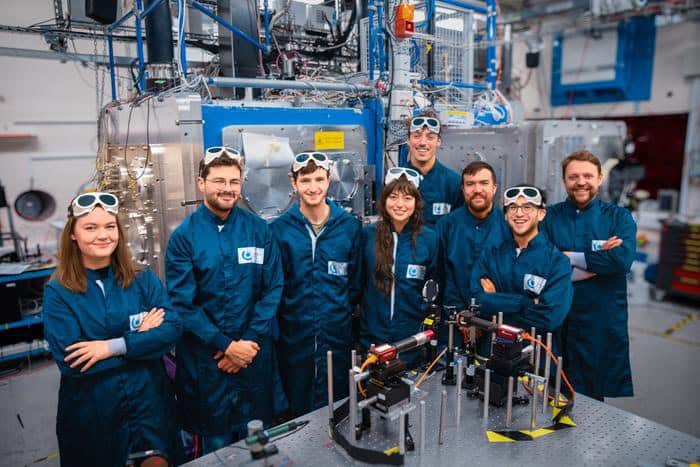
Oxford used a plasma mirror to amplify extreme ultraviolet light. The Gemini laser setup reached estimated intensities near 10^23 W/cm^2. That narrows the gap toward QED tests and vacuum physics. Researchers now have a clearer path to larger field experiments.
Key points
- Oxford squeezed light harder.
- A plasma mirror and coherent harmonic focus lifted XUV intensity dramatically.
- The beam got three-orders brighter.
- Gemini laser work suggests 10^23 W/cm^2 may be reachable, though the peak was inferred indirectly.
- That opens tests of QED and vacuum physics.
This is one of fifty stories I surfaced this week from Surface — a tiny slice of the full feed.